Buying a Laptop Shouldn’t Be This Hard
- I didn’t need more compute. I needed a personal machine again.
- The hard part wasn’t picking a laptop. It was admitting I don’t live the “custom desktop” life anymore.
- The real upgrade wasn’t hardware. It was letting go of an old identity and moving on.
This should have been an easy purchase.
It wasn’t — because I wasn’t.
I went back and forth on this longer than I want to admit.
Not because the decision was complicated.
Because I was.
For six months, I didn’t have a personal computer. Not really. I had a work-issued Precision — a machine I respect, depend on, and very intentionally try not to blur into “mine.”
And every time I thought about fixing that gap, I spiraled.
Specs.
Generations.
Refurb vs new.
Dock compatibility.
Keyboards.
Displays.
Linux fantasies.
Windows reality.
Round and round.
What finally broke the loop wasn’t a benchmark or a review. It was realizing what I was actually trying to replace — and what I wasn’t.
What I’m coming from
My last personal machine was a custom-built desktop.
X99 motherboard.
Xeon.
64 GB RAM.
NVMe plus spinning rust.
GTX 1070.
It ran for almost ten years.
It didn’t die suddenly. It just… faded. One day it powered off and didn’t come back. I left it sitting there, half-disassembled, like a monument to a past version of myself who had more time, more patience, and a much higher tolerance for tinkering.
That machine carries more weight than it probably should.
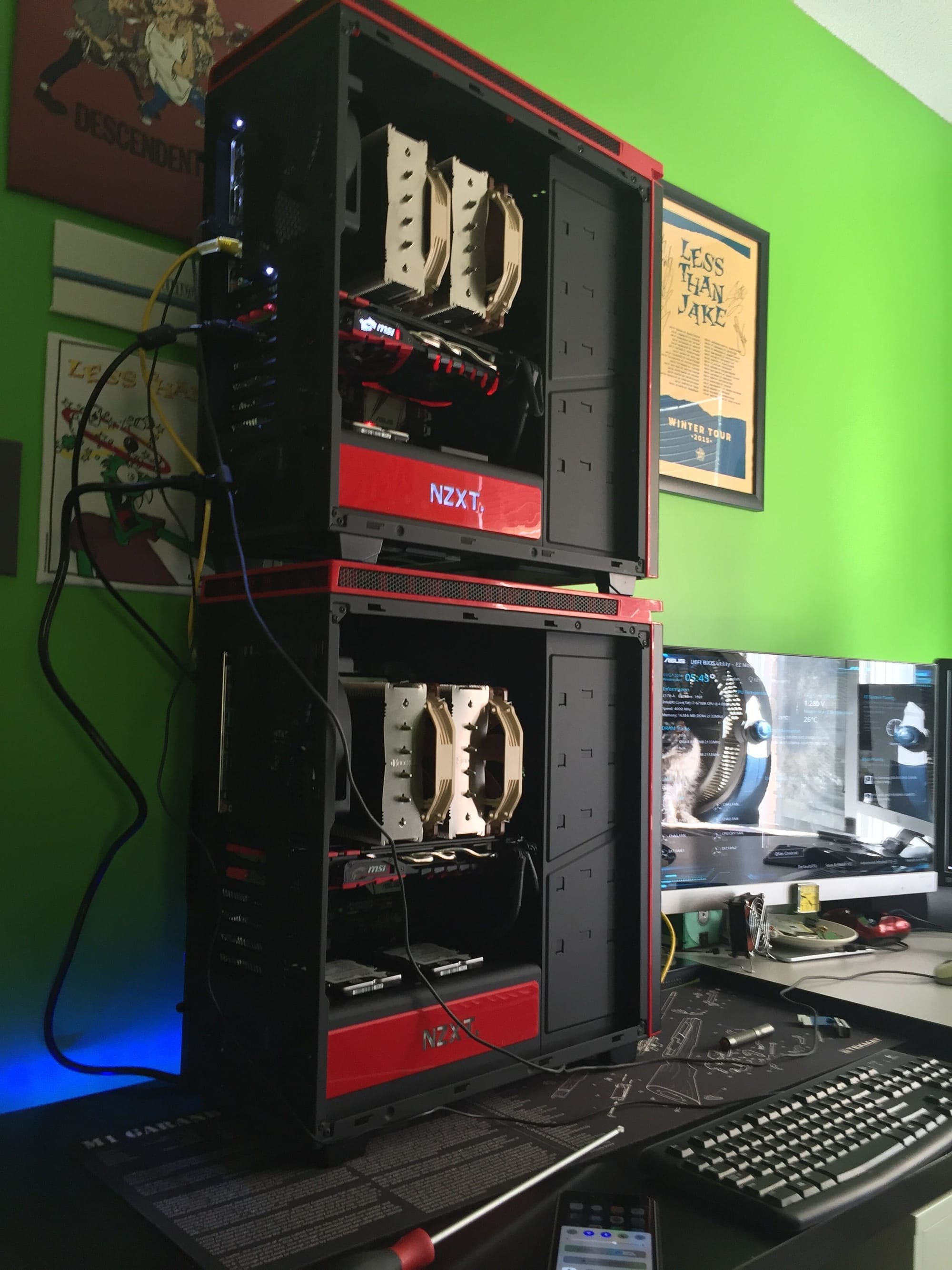
It was one of two systems I built with my daughter. When she graduated high school, she wanted a computer as her gift. Being the kind of geek I am, we built two.
That desktop moved with me through four moves, the birth of a new son, and a divorce. It occupied an unreasonable amount of desk space in multiple houses. It held far more than files and configs.
It held time.
It also held a comically oversized Noctua heatsink that made even basic maintenance an exercise in patience, blood sacrifice, and remembering why laptops exist.
That machine wasn’t just compute. It was identity.
Builder.
Tweaker.
Optimizer.
Letting it go felt heavier than it should have.
What I actually need now
Here’s the uncomfortable part:
I don’t live that life anymore.
I don’t game.
I don’t overclock.
I don’t spend weekends tuning BIOS settings.
What I do:
- Write
- Read
- Research
- SSH into other machines
- Write SQL
- Script
- Think
- Build small labs that live elsewhere
- Occasionally geek out, briefly and intensely, then move on
I don’t need a shrine.
I need a tool.
And I need it to work every time, without ceremony.
The laptop spiral
I wanted to be the person who daily-drives Linux again.
I respect that person.
I admire that person.
I am not reliably that person anymore.
What I actually want is:
- Windows that doesn’t fight me
- WSL when I feel like dropping into a shell
- Hardware that disappears instead of demanding attention
- Battery life that doesn’t make me anxious
- A keyboard that doesn’t punish me for writing
Once I admitted that, the decision narrowed fast.
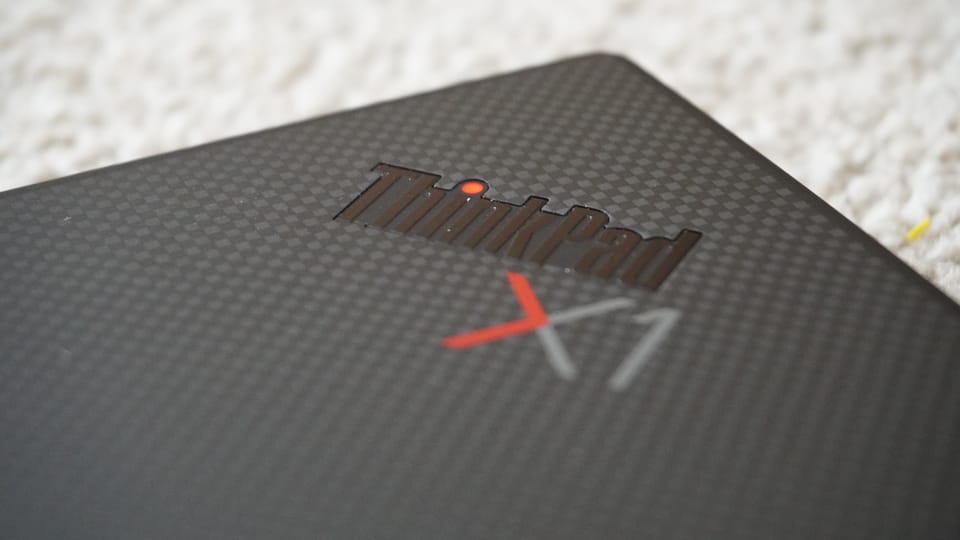
Why the X1 Carbon (and why Gen 12)
I didn’t buy this because it’s exciting.
I bought it because it’s boring in exactly the right ways.
Light enough to carry without thinking.
Strong enough to last years, not months.
An excellent laptop keyboard — not mechanical-good, but honest.
No OLED nonsense.
No gamer edges.
No AI cosplay I didn’t ask for.
I looked at Gen 9.
I looked at Gen 10.
I looked at Gen 13 — with its baked-in “Aura” AI Copilot features — and felt immediate secondhand embarrassment at the gimmick, the added cost, and the battery tax that comes with OLED.
I looked at prices until my brain shut down.
Then I stopped optimizing and just… committed.
New.
Factory sealed.
Warranty through 2026.
Done.
The moment it clicked
The moment that finally quieted my brain wasn’t unboxing.
It was realizing this laptop doesn’t need to replace my old desktop.
It replaces access to myself.
A personal space.
A personal machine.
A boundary between “work device” and “me thinking.”
That matters more than raw compute.
How I plan to use it
This is not my everything machine.
It’s my thinking machine.
- Writing
- Research
- Personal projects
- Dev labs that live on other hosts
- SSH, terminals, scripts
- Weekend curiosity
- Quiet evenings where I don’t want to sit at a desk that feels like work
This doesn’t mean I’m done with desktops forever.
I’m not ruling out building another machine someday — maybe when my sons are older, when they’re curious, when it makes sense to sit at a bench again and explain why thermal paste matters. That part of me isn’t gone. It’s just not what I need right now.
Right now, I need something that works.
Enough power to never feel slow.
Portable enough to move with me instead of anchoring me to a desk.
Quiet enough — mentally and physically — to stay out of the way.
This isn’t a rejection of power.
It’s choosing the right amount of it, for the life I’m actually living.
The real lesson (again)
This whole process took longer than it should have because I was solving the wrong problem.
I wasn’t choosing hardware.
I was letting go of an old version of myself.
Once I accepted that, the decision stopped being emotional.
I didn’t buy the “best” laptop.
I bought the right one for who I am now.
And honestly?
That’s the hardest upgrade there is.
I don’t even have the laptop yet
At the time I’m writing this, the laptop isn’t here.
It’s somewhere between a warehouse in Shrewsbury, Massachusetts and my front door, which feels appropriate given how much mental bandwidth I’ve already spent on it.
Additional things I ordered from Amazon that aren't here yet either:
- An NVMe enclosure for the old M.2 drive.
- A SATA adapter for the 2.5-inch spinning rust.
The desktop itself is still dead, sitting quietly, holding years of files I mostly don’t need anymore — and a small subset I absolutely do.
That’s the next step.
Not recovering everything.
Recovering what’s worth keeping.
There’s a difference.
What comes next
This post wasn’t about the machine. It was about the decision.
The next one will be about reality:
- Unboxing the X1
- Setting it up without ceremony
- Deciding what actually belongs on a personal machine in 2026
- Pulling files off old drives and leaving the rest behind
- Letting go of data the same way I let go of the desktop life
No nostalgia tour.
No heroic resurrection of ancient configs.
Just a clean start, with intention.
If this post reads unfinished, that’s because it is.
So is the process.
I’ll follow up once the laptop arrives, the drives spin up, and I’ve decided which parts of my old digital life are still allowed to come with me.
Everything else can stay powered off.